Introduction
Facts tell, but stories sell—and teach better. According to research, story-driven lessons are remembered 22 times more than facts alone. Rather than relying only on information, storytelling transforms concepts into memorable experiences. In addition, emotional editing enhances retention, strengthens instructor-student bonds, and keeps learners motivated.
This guide demonstrates how to use narrative structures, emotional pacing, and technical techniques to turn dry lessons into engaging, story-driven course videos. https://www.fiverr.com/s/akGkdXG
Why Emotional Storytelling Works in Education
✔ Boosts retention by 65% compared to lecture-style teaching
✔ Increases completion rates through emotional investment
✔ Builds stronger instructor-student connections
✔ Makes complex concepts relatable through real-world examples our services
Therefore, storytelling ensures learners don’t just watch your lessons—they remember and apply them in practice.
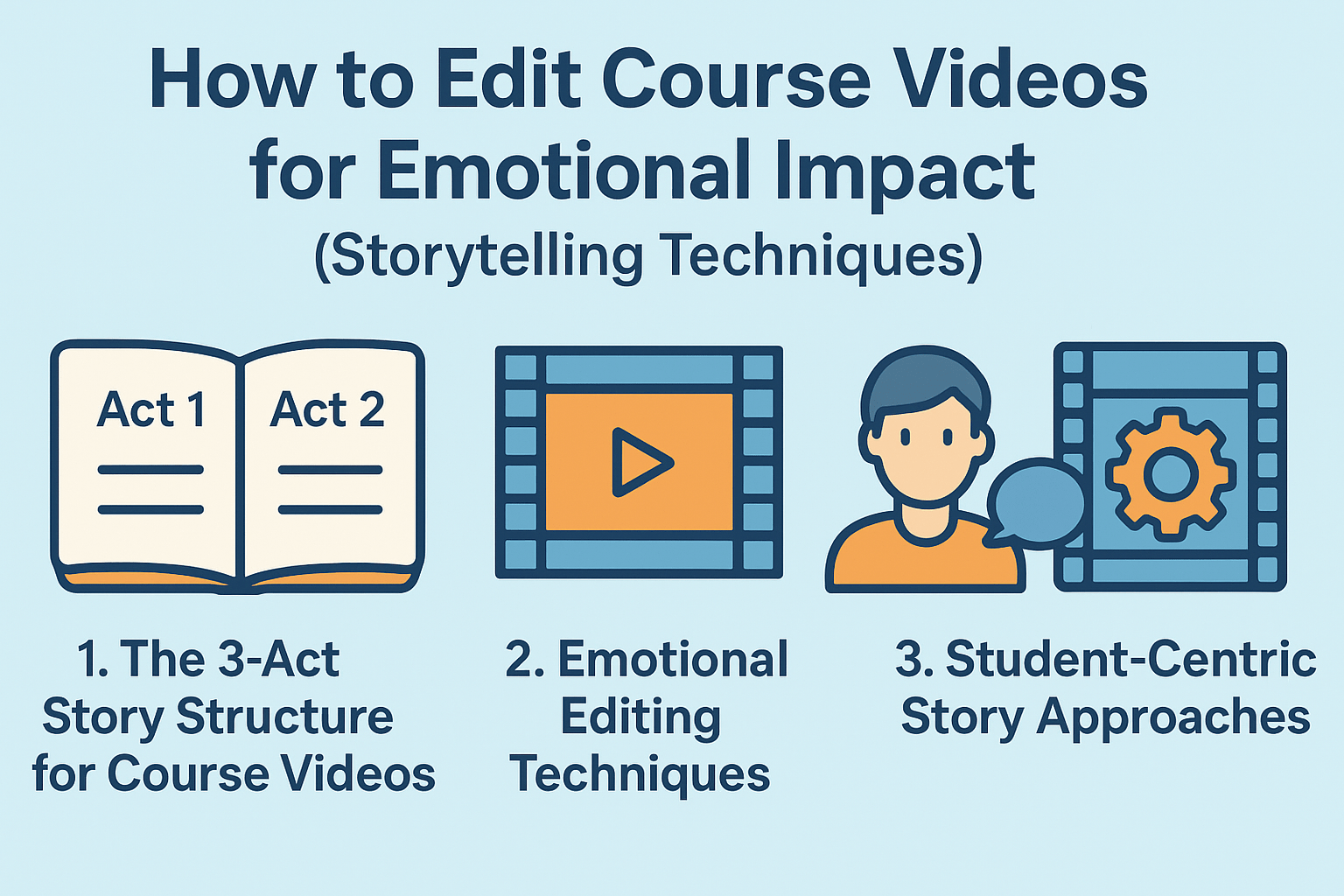
1) The 3-Act Story Structure for Course Videos
Best Narrative Edits for Courses
Act 1 (Setup):
- Begin with a relatable problem or story (the hook)
- Present a “before” scenario to create tension
Act 2 (Conflict):
- Guide learners through the journey step by step
- Highlight both struggles and breakthroughs
Act 3 (Resolution):
- Demonstrate transformation clearly
- Provide real-world application for context
🎬 Editing Tip: Use musical cues and pacing shifts to emphasize each act.
🚀 Pro Tip: If you need help crafting compelling narratives, consider hiring a storytelling video editor.
2) Emotional Editing Techniques That Work
Visual Storytelling
- Shift to close-ups during emotional moments
- Insert B-roll that strengthens the narrative
- Apply subtle color grading to match the mood
Audio Enhancement
- Layer ambient sound for immersion
- Introduce strategic silence for impact
- Build music swells at key turning points
Pacing Magic
- Use slow motion to emphasize important demonstrations
- Insert quick cuts to generate energy during active sections
- Extend takes to encourage reflection and focus
Consequently, edits align emotion with learning impact. Furthermore, these techniques help students stay invested and attentive throughout the lesson.
3) Student-Centric Story Approaches
The Hero’s Journey
Position the student as the hero who will:
- Accept the “call to adventure” (course)
- Gain new skills through lessons
- Return transformed with a final project
Case Study Format
- Introduce a relatable character
- Explain their challenge in detail
- Reveal your solution’s positive impact
Before/After Stories
Use split-screen or transition effects to highlight transformations.
👉 When learners see themselves in the story, they engage more deeply. In turn, emotional editing strengthens that connection and sustains long-term motivation.
4) Technical Execution
| Element | Emotional Impact Technique |
|---|---|
| Music | Strategic crescendos at breakthroughs |
| Color | Warm tones for success stories |
| Text | Animated emphasis on key quotes |
| Transitions | Match cuts to the story’s rhythm |
DIY vs. Professional Story Editing
| DIY Approach | Professional Editor |
|---|---|
| Personal touch | Expert narrative pacing |
| Cost-effective | Hollywood-grade techniques |
| Time-intensive | Emotional impact guaranteed |
💡 For maximum engagement, consider professional story editing. As a result, you save time and achieve polished emotional resonance. https://www.fiverr.com/s/dD1D7Az
Tools for Emotional Editing
- Premiere Pro — Advanced narrative control
- Descript — Story-based editing made simple
- Artlist — Emotional music tracks for storytelling about us
Conclusion
When you edit course videos for emotional impact, you move beyond dry instruction. By applying storytelling structures, emotional pacing, and student-centered approaches, your lessons evolve into memorable experiences. Moreover, emotional editing ensures learners feel connected, invested, and eager to complete your course. As a result, engagement levels rise and learner satisfaction improves significantly. Contact us